
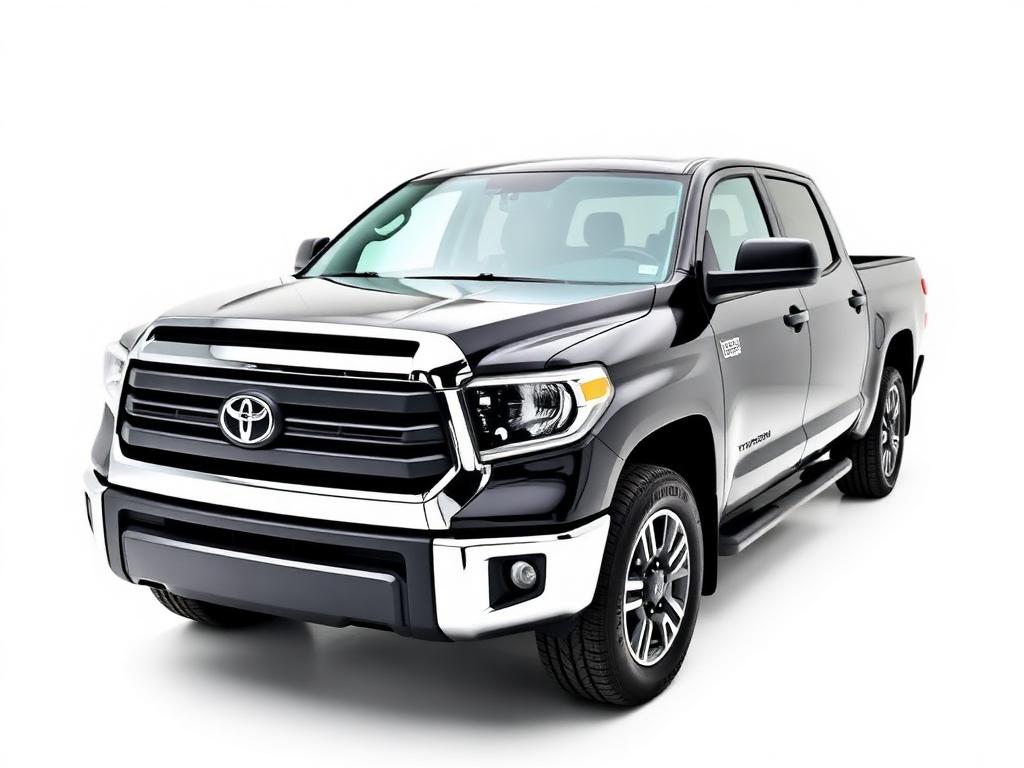



For many small business owners, a vehicle is not just transportation.
It is a tool for the business.
A work truck, cargo van, SUV, or company vehicle can affect cash flow, scheduling, productivity, customer service, and the ability to take on more work. That is why the way a business acquires a vehicle matters.
One option some business owners hear about is a TRAC lease, also known as an open-end lease with a Terminal Rental Adjustment Clause.
The name sounds complicated, but the basic idea is fairly simple.
A TRAC lease is a commercial vehicle lease structure where the business uses the vehicle during the lease term, and at the end of the lease, the vehicle's value is compared to the agreed residual value.
In plain English: the business may get more flexibility during the lease, but it may also have more responsibility at the end.
Why Businesses Consider a TRAC Lease
Many businesses need vehicles but do not always want to tie up a large amount of cash buying them outright.
A contractor may need another work truck.
A service company may need another van.
A church, nonprofit, or local organization may need a vehicle for staff, equipment, or transportation.
A growing business may need to add vehicles before cash flow feels comfortable.
In these situations, the question is not just:
“What vehicle should we get?”
The better question is:
“What is the smartest way for the business to acquire this vehicle?”
Buying may make sense. Traditional financing may make sense. Auction sourcing may make sense. A closed-end lease may make sense. And in some situations, a TRAC lease may be worth considering.
How a TRAC Lease Works
A standard consumer lease is usually built around fixed mileage limits, wear-and-tear guidelines, and returning the vehicle at the end.
A TRAC lease is different.
It is commonly used for commercial vehicles because business use can be harder to predict. Work trucks and vans may drive more miles, carry heavier loads, operate on different routes, or be used in ways that do not fit a standard lease.
With a TRAC lease, the agreement includes an estimated residual value. That is the expected value of the vehicle at the end of the lease.
At lease end, the actual value or sale result is compared with that residual.
If the vehicle is worth more than expected, the business may benefit from the difference.
If the vehicle is worth less than expected, the business may be responsible for the shortfall.
That is the trade-off.
A TRAC lease can offer flexibility, but the business needs to understand the lease-end responsibility before signing.
Why the Residual Matters
The residual value is one of the most important parts of a TRAC lease.
If the residual is set too low, the monthly payment may be higher than necessary. At that point, the business may wonder why it did not simply finance or purchase the vehicle.
If the residual is set too high, the monthly payment may look attractive, but the business could face a larger adjustment at the end if the vehicle is not worth that amount.
That is why the lowest payment is not always the best deal.
The lease structure needs to make sense for the vehicle, the mileage, the expected use, the condition at lease end, and the likely future value.
This is especially important with work trucks and vans because values can change based on mileage, equipment, condition, demand, and availability in the used commercial market.
When a TRAC Lease May Make Sense
A TRAC lease may be useful when a business needs more flexibility than a standard consumer-style lease.
It may make sense for businesses that:
- Need work trucks, cargo vans, SUVs, or company vehicles for daily operations.
- Expect higher mileage or less predictable usage.
- Want to preserve cash instead of buying vehicles outright.
- Plan to replace vehicles on a schedule.
- Understand that the end-of-term value matters.
- Want a structure designed for commercial use.
But it is not automatically the right answer for every business.
When a TRAC Lease May Not Be the Best Fit
A TRAC lease may not be ideal if the business wants a simple walk-away lease with less responsibility at the end.
It may also be risky if the owner is only focused on getting the lowest monthly payment and does not fully understand the residual.
If the vehicle will be heavily abused, poorly maintained, driven far beyond expectations, or modified in a way that hurts resale value, the business needs to be careful.
The same is true if there is no plan for what happens at the end of the lease.
Will the vehicle be replaced?
Will it be sold?
Will the business want to keep it?
What happens if the market value is lower than expected?
Those questions should be asked before the lease is signed, not after.
A TRAC Lease Is a Tool, Not the Whole Strategy
Many small businesses make vehicle decisions reactively.
A truck breaks down. A van gets totaled. A new employee needs a vehicle. A job requires another unit.
The owner gets busy, compares a few payments, and makes the fastest decision available.
That may work once in a while, but over time, random vehicle decisions can become expensive.
One vehicle is financed one way. Another is leased another way. One has too many miles. Another has the wrong equipment. One was bought too high. Another is worth less than expected.
That is why businesses need more than a vehicle.
They need a vehicle acquisition strategy.
A TRAC lease can be one useful tool, but it should be compared with buying, traditional financing, auction sourcing, and other available options.
How Auto Networx Can Help
At Auto Networx, we help business owners look at the vehicle decision before they get buried in the deal.
The goal is not to push one option.
The goal is to help you understand the options.
For some businesses, buying is best. For others, traditional financing makes sense. For some, auction sourcing may create an opportunity. And in certain commercial vehicle situations, a TRAC lease or open-end lease structure may be worth exploring.
The important thing is knowing why.
The vehicle needs to fit the job.
The structure needs to fit the business.
And the end of the agreement needs to be understood before the beginning.
Final Thought
A TRAC lease can be a useful option for business vehicles, especially when flexibility, mileage, and cash flow matter.
But it is not something to choose blindly.
The residual matters.
The lease-end responsibility matters.
The vehicle's condition and future value matter.
For business owners, the goal is not just to get a low payment.
The goal is to make a smart vehicle decision that supports the business.
If your business needs work trucks, vans, SUVs, or company vehicles and you are not sure whether buying, financing, auction sourcing, or a TRAC lease makes the most sense, Auto Networx can help you review the options before you commit.
This article is for general educational purposes only and should not be considered tax, legal, or accounting advice. Business owners should review lease terms carefully and consult their accountant, tax professional, or legal advisor before making a final decision.
Related reading